
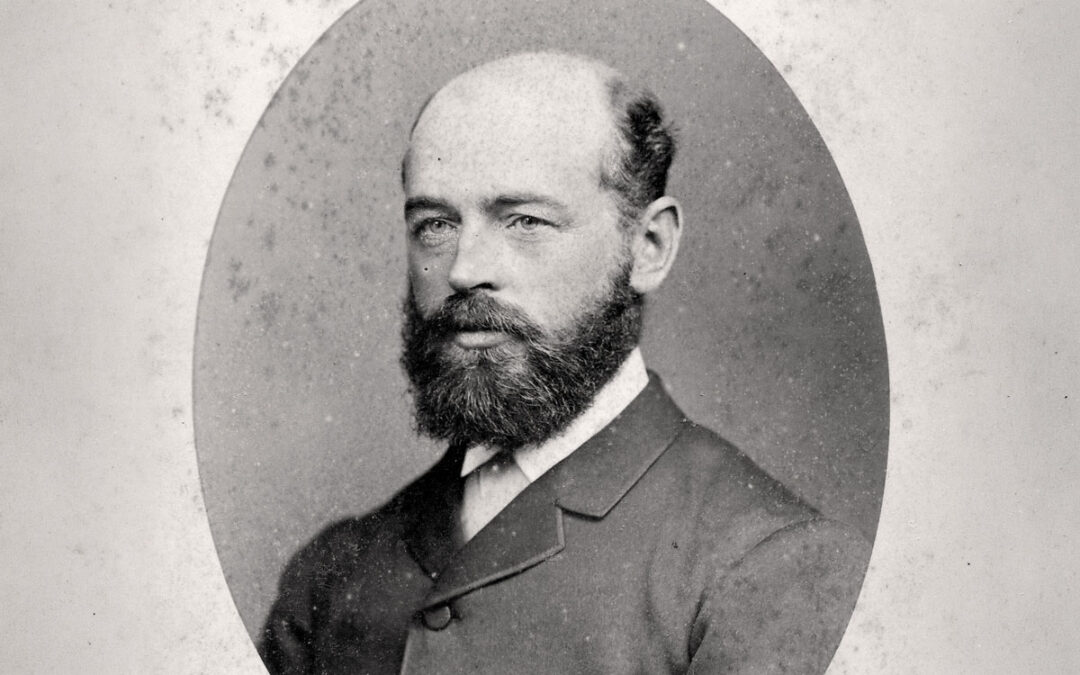
Every time someone says the word Engadine, they are saying the name of one man’s dream. The streets, the station, the suburb itself – all of it traces back to an Irish immigrant who saw something in this bushland that no one else had noticed yet. Get to know the story of Charles McAlister. The Tharawal People Before we convey that story of Charles, there is a much older story to recognise. The Tharawal people, also known as the Dharawal, had lived on this land for thousands of years before any Europeans arrived. They knew every ridge, every river bend, every sandstone escarpment. The bush that still borders Engadine to the east and west, the Woronora River, the slopes running down toward the national park, none of it was wilderness waiting to be discovered. It was home. Lived in, cared for, and deeply known. Their connection to this place is not a footnote to Engadine’s history. It is the foundation of it. European settlement changed everything for the Tharawal people, as it did for First Nations communities across the country. When Charles McAlister purchased his land in 1887, he was not arriving somewhere new. He was arriving somewhere ancient. From Ireland to Sydney Charles McAlister was born in Ireland around 1844. He arrived in New South Wales in 1866, aged 22. Like many Irish emigrants of that era, he came looking for a fresh start and an opportunity to build something. He started with a grocery business in Sydney. Then came something more adventurous. He was drawn north to the pearl fishing industry around Thursday Island in the Torres Strait. It was a life built on enterprise and restlessness. He was always looking toward the next horizon. A Piece of Land and a Vision McAlister married Christina Ballantine in 1885. Not long after, he purchased land in the Heathcote district around 1887. The Illawarra railway line had just opened in 1886, and crown land was being made available for sale. Where others saw isolated bush, McAlister saw potential. He purchased approximately 17 acres to the north of Heathcote, running along Old Illawarra Road towards the Woronora River.  He and Christina built a modest cottage on the land around 1888. They called it Sunbeam Cottage. Over the following years they added to it – outbuildings, and eventually even a ballroom alongside the original cottage. In about 1897 the expanded property was given a new name: Holmlea. A ballroom in the bush. It tells you something about the kind of man he was. The Name That Stuck At some point after settling on their property, Charles and Christina McAlister took a trip overseas. When they returned, their estate had a new name. The hills and valleys had reminded McAlister of the Engadin Valley in Switzerland. The national park nearby added to the similarity. So, he named his estate Engadine. The wildflowers growing across the valley and surrounding bush only reinforced what he had already felt. Over time, that name spread to the whole township.
  He also gave Waratah Road its name, inspired by the profusion of native waratahs growing across the area. Think about that for a moment. A man walks back onto his land after seeing the world and reaches for a name that captures what he feels. And more than 130 years later, over 17,000 people (2021 Census) use that name to describe where they live. Building a Community McAlister didn’t just name the place. He actively worked to build it. Around 1900 he began subdividing his land, opening it up for other families to settle. He lobbied hard for a railway station, wanting to connect the growing community to Sydney. He never saw it happen. The station didn’t open until 1920, four years after his death. In 1906 he was nominated to serve on Sutherland Shire’s provisional council. He was then elected to the first formal council, which held its inaugural meeting on 5 December 1906. He served until 1913, and stood again in the 1914–1916 election, though he was unsuccessful that time.
  When World War One came, he pushed for crown land to be made available to returned soldiers. He offered part of his own estate for sale to support the cause. He called Engadine the “sanatorium of the south” and promoted it to anyone who would listen. Further land subdivision was encouraged as a result and by 1929 another application for a school was made. Many families took advantage of a subdivision made in 1931 in response to hardships of the Depression. Due to the increase in population, a School of Arts was formed to offer social activities for the new community. Engadine was proclaimed a village in 1933 and a school was officially opened. Charles McAlister’s Legacy Charles McAlister died on 15 October 1916. He left his estate to Christina. She continued living in Engadine for some years before eventually moving to Cronulla. Both Charles and Christina made significant bequests to charitable organisations. The village he helped seed was officially proclaimed in 1933. By then it had 417 residents and 111 dwellings. The Lions Club of Engadine historically ran the McAlister Community Fete at Cooper Street Reserve in honour of the McAlister family, who originally settled the area. His house, Holmlea, still stands on Woronora Road. McAlister Avenue carries his name. Waratah Road carries his eye for the country he loved. Not bad for an Irish grocer who once fished for pearls in the Torres Strait. Stay tuned as we delve into some of the local stories that have shaped our community. Acknowledgement of Country Engadine sits on the traditional country of the Tharawal people. We acknowledge their elders past, present and emerging, and recognise that their connection to this land never ended. The story of this place belongs to them first, and we are grateful to be part of the community that continues to grow here. Sources:
For deeper reading, Joan Thompson’s Engadine, New South Wales: An Outline History (Lions Club of Engadine, 1991) is held at Sutherland Shire Libraries.